DSS DSS

Team

   Professors
   External Lecturers
   Office Assistance
   System Administration
   Internal PhD Students
   External PhD Students
   Students
   Alumni
   Company Founders
   DSS Cups

Research

   Research Topics
   Real-time Framework
   Publications

Teaching

   Lectures
   Labs
   Seminars
   Student Projects
   Theses
   Evaluations
   Exam and Lab Booking
   RED

News

   Recent News
   Years in Review

Events

   Talks
   Conferences and Workshops
   Science Outreach
   Science Slam
   Ger. Acad. Scholarship Foundation

Media Center

   Audio Examples   
   Data Bases
   Pictures
   Surveys
   Videos

GaS

   Basic Information
   Awards
   Members
   Reports
   Statute

DSS DSS
  • Home
  • Team
    • Professors
    • External Lecturers
    • Project Coordination
    • Office Assistance
    • System Administration
    • Internal PhD Students
    • External PhD Students
    • Company Founders
    • Students
    • How to Find Us
    • DSS Cups
    • Alumni
  • Research
    • Research Topics
    • Publications
    • Real-time Framework
  • Teaching
    • Lectures
    • Labs
    • Seminars
    • Student Projects
    • Theses
    • Evaluations
    • Oral Exam Booking
    • RED
    • Handouts for Talks
  • Events
    • Talks
    • Conferences and Workshops
    • Science Outreach
    • Science Slam
    • Studienstiftung
    • Kieler SONAR-Schnack
  • News
    • GaS Price for Marten Finck 2024
    • Podcast 2024
    • Years in Review
    • Acoustic Damping Mats Successfully Installed in Our Maritime Test Facility
    • Sören Lange Joined the DSS Team
  • Media Center
    • Audio Examples
    • Data Bases
    • Pictures
    • Surveys
  • GaS e.V.
    • Auszeichnungen
    • Mitglieder
    • Satzung
    • Verein
    • Tagesordnungen und Protokolle

PhD Theses


No. 11 - Minh H. Pham

Minh H. Pham: Axial Movements in Older Adults and Patients with Parkinson’s Disease – Algorithm Development and Validation with Inertial Measurement Units Data

To appear soon, 2019


Commission

  • Prof. Dr.-Ing. Gerhard Schmidt
    (first reviewer)
  • Prof. Dr. med. Walter Maetzler
    (second reviewer)
  • Prof. Dr.-Ing. Andreas Bahr
    (examiner)
  • Prof. Dr.-Ing. Michael Höft
    (head of the examination board)


Abstract

Movements that deviate from physiological performance are associated with many disabilities and reduce the ability to perform daily activities. These impaired movements are associated with e.g. aging and neurodegenerative diseases. An objective and quantitative evaluation of these impaired movements is of high clinical relevance, for both patients and the professional medical team that treats the patient. Moreover, assessment in the usual environment of the affected persons may be superior to assessments performed in the clinic and doctor’s practice, because the latter environments may lead to artificial results and can only be performed at certain time points.

The dynamic development of mobile technological devices has led to a new era of assessment in the medical field. Assessment of movements, especially axial (i.e. close to body center / trunk) movements are especially interesting for this development as sensors that detect movements accurately – e.g. accelerometers, gyroscopes and magnetometers – are especially far developed, reasonably priced and easily to integrate in mobile technology. However, there is a substantial lack of useful and, particularly, of validated algorithms for sensors and inertial measurement units that detect quantity and quality of specific movements in vulnerable cohorts. This work contributes to this area to such an extent, as it presents and discusses three algorithms that detect and evaluate specific movements detected with an inertial measurement unit (IMU) worn on the lower back by older adults and patients with Parkinson’s disease (PD). This work includes the evaluation of data from the supervised and unsupervised environment, and the validation of each algorithm.


No. 10 - Christin Baasch

Christin Baasch: Instrumentelle Analyse von Parkinson-Sprache

Shaker-Verlag, 2019


Commission
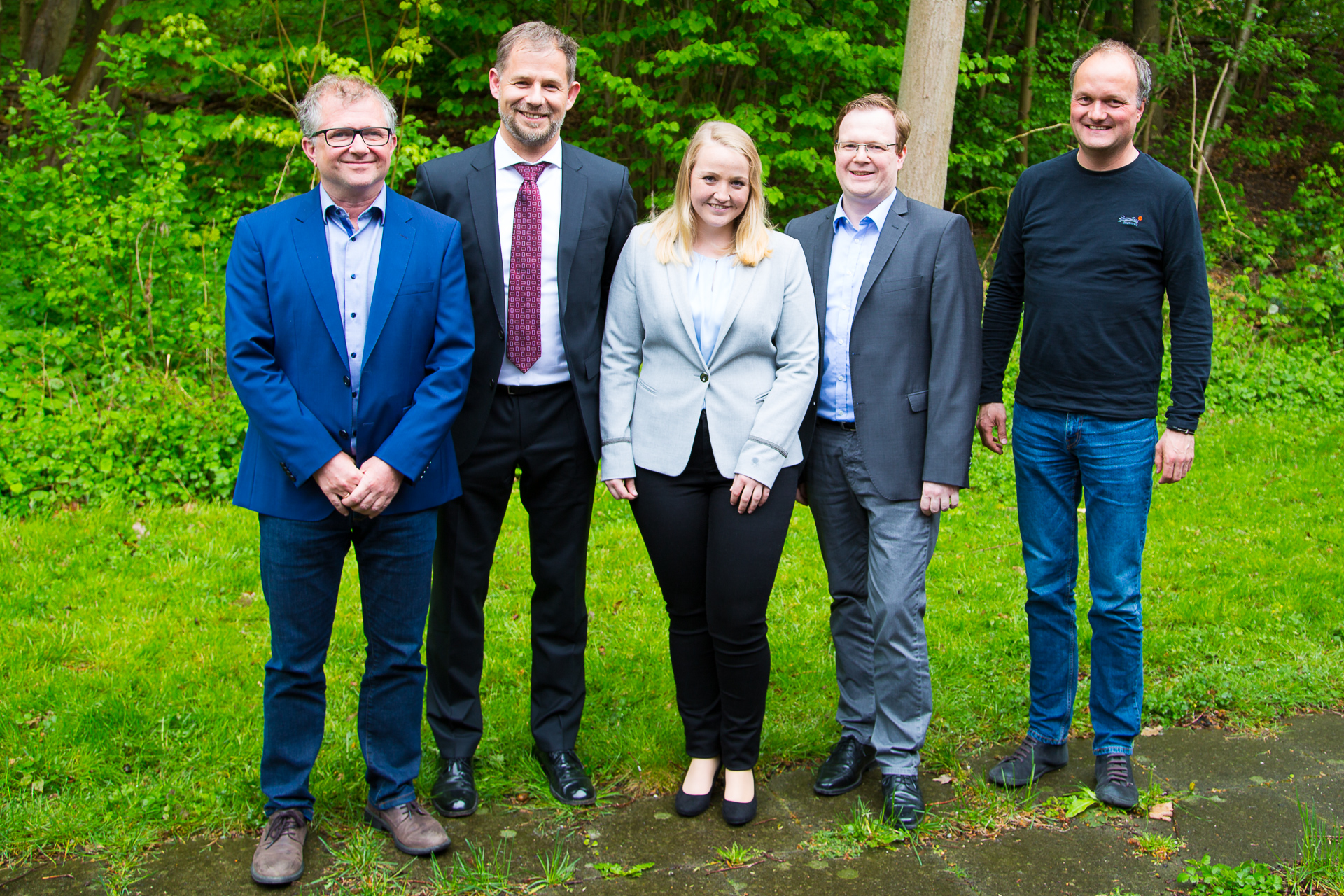
  • Prof. Dr.-Ing. Gerhard Schmidt
    (first reviewer)
  • Prof. Dr.-Ing. Sebastian Möller
    (second reviewer)
  • Prof. Dr.-Ing. Stephan Pachnicke
    (examiner)
  • Prof. Dr.-Ing. Jeffrey McCord
    (head of the examination board)


Abstract

Parkinson’s Disease is one of the most frequent neurodegenerative diseases worldwide. Besides motor disorders, patients affected by this disease mostly suffer from a speech disorder named dysarthria.

It will be treated by a speech therapist with a speech therapy, its success as well as the progress of the dysarthria shall be documented. Therefore, a multitude of different methods are available to do so, but all of them have one thing in common: they are not completely objective, because not fully automatic. There ist always a subjective component, where a rater or another person influences the process.

This work presents a system, named SINAS, for fully automatic rating of the dysarthria. The system contains two main components: a recording tool and an analysis tool. The first one gives the possibility to the speech therapist to guide the patient easy and with visual aid by HTML pages through different speech tasks. Thereby the recordings will be robust in level and independent of the position of the microphone.

In the analysis tool acoustic measures are calculated from the recordings, which are intended to evaluate the three clusters of symptoms of dysarthria. These measures form the entry of a neural network, which gives an NTID rating as a result. The NTID scale rates the inteligibility of the recording and therefore the dysarthria of the patient in six steps. The validation of the tool is done by comparison of the results with a survey, where people rated the recordings of Parkinson patients according to the NTID scale, the mean value for each recording is then taken as a reference. As cost functions for evaluating the developed system the correlation, the mean absolute error, as well as the variance of the error are taken, on the basis of these functions the system will be optimized.

For further evaluation and to take into account the uncertainty of the raters, the epsilon insensitive RMSE is used to evaluate the performance of the system. This clearly shows the possibility of a fully automatic NTID rating of the patients with the presented SINAS system.

The developed tool can now form the basis for many applications to support the speech therapy of Parkinson patients.



No. 9 - Philipp Bulling

Phlipp Bulling: Rückkopplungsunterdrückung für Innenraumkommunikationssysteme

Pdf-based submission (available freely via the MACAU system), 2018


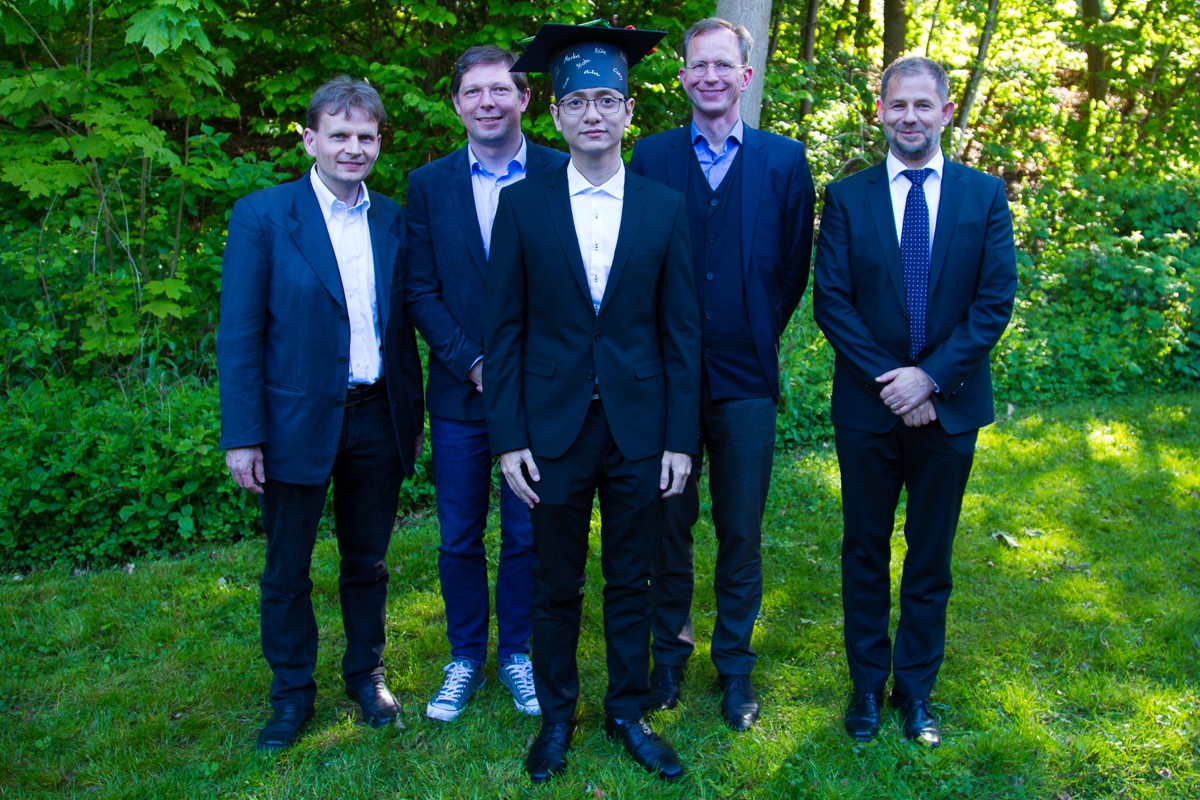
Commission

  • Prof. Dr.-Ing. Gerhard Schmidt
    (first reviewer)
  • Prof. Dr.-Ing. Jürgen Freudenberger
    (second reviewer)
  • Prof. Dr.-Ing. habil. Thomas Meurer
    (examiner)
  • Prof. Dr.-Ing. Michael Höft
    (examiner)
  • Prof. Dr.-Ing. Jeffrey McCord
    (head of the examination board)


Abstract

The communication between the passengers inside a car can be difficult due to large background noise levels. It can be improved with so-called in-car communication systems. These systems capture the voice of talkers by means of microphones and play it back via loudspeakers close to the listeners. However, the challenge is the electro-acoustic feedback, which occurs when the microphone not only captures the local speech but also the loudspeaker signal. Without countermeasures, this feedback results in annoying howling sounds.

The problem of the electro-acoustic feedback has not yet been solved for in-car communication systems. Therefore, in this work techniques to suppress the feedback by means of digital signal processing are presented. The main part of this work focuses on adaptive feedback cancellation. Here, the impulse response between loudspeaker and microphone is estimated with an adaptive filter. The difficulty is a strong correlation between loudspeaker and local speech that prevents the adaptive filter from converging towards the desired solution. In order to improve convergence, a novel stepsize control is presented. As signals are not correlated during reverberation, the stepsize control exploits reverberant signal periods to update the filter coefficients. In addition to the adaptive feedback canceler, a postfilter is presented. The task of the postfilter is to suppress the residual feedback that remains after the feedback cancellation, by means of a Wiener-filter. Therefore, the postfilter is controlled depending on the adaptive filter's state of convergence. Finally, two techniques to improve the speech quality are presented. Firstly, an automatic equalizer is described that improves the sound quality. Secondly, it is shown that speech intelligibility can be improved by adding harmonics to a speech signal.

Besides the theoretical investigations, in this work also the practical realization of the algorithms is regarded. Therefore, the algorithms are integrated into a specially developed real-time framework and tested in demonstration cars under realistic conditions during numerous test drives. These test drives show a significant increase of both stability and speech quality compared to existing approaches.


No. 8 - Jens Reermann

Jens Reermann: Signalverarbeitung für magnetoelektrische Sensorsysteme

Shaker-Verlag, 2017


Commission

  • Prof. Dr.-Ing. Gerhard Schmidt
    (first reviewer)
  • Prof. Dr. rer. nat. habil. Franz Faupel
    (second reviewer)
  • Prof. Dr.-Ing. Dr.-Ing. habil. Robert Weigel
    (third reviewer)
  • Prof. Dr.-Ing. Michael Höft
    (examiner)
  • Prof. Dr.-Ing. habil. Eckhard Quandt
    (head of the examination board)


Abstract

The measurement of magnetic fields for medical diagnostics is only well-established at highly specialized centers because of the high costs involved. The reason for this is the indispensable use of highly sensitive magnetic field sensors based on Super-Conducting Quantum Interference Devices. Although such systems have met the necessary technical requirements for decades, they are nonetheless expensive and very complicated to run because of cryogenic cooling. To establish the widespread use of magnetic measurements in the field of medicine, concepts for sensors that are uncooled, and thereby less expensive and user-friendly, are being researched with detection limits sufficient for measurements. A promising area of research deals with magnetoelectric sensors (ME-sensors).

To increase the usability of such sensors in realistic measurement environments and improve their signal quality with respect to the signal-to-noise ratio (SNR), this thesis examines various methods of signal processing. First, the basic procedures for measuring magnetic signals using the ME-sensors are presented. Special attention is paid to the modelling of sensor systems, the determination of the operation point, and the reduction of the signal dynamic. Due to their cantilever design, the ME-sensors have a high mechanic cross-sensitivity. Furthermore, they also measure magnetic fields of disturbing sources. To reduce their influence, the work presented here investigates different approaches based on noise cancellation. The use of a magnetic reference successfully cancels magnetic disturbances. With regard to acoustic or mechanical disturbances, various reference sensors are considered.

Irrespective of the distortion type, their influence can be reduced by up to 40 dB. Additionally, combination approaches are also investigated. These approaches are based on the idea of utilizing different frequency ranges in parallel and subsequently combining the sensor readout signals. By means of such methods, the detection limit of the sensors can be improved by more than 5 dB. In addition to this static improvement, another decisive advantage is achieved with dynamically adapting the combination. If a continuous data stream is not required and the desired signal has in principle a periodic nature, several averaging methods for an improved detection limit are discussed. In the same way, adaptive implementation of the averaging process can reduce the crosssensitivity.

These methods enabled the first biomagnetic measurement with an MEsensor by detecting the R-wave as part of a magnetocardiogram. All in all, each processing step permits continued improvement of the sensor signal with regard to their SNR. The usability of the ME-sensors in real measurement environments is thereby significantly improved.


No. 7 - Jochen Withopf

Jochen Withopf: Signalverarbeitungsverfahren zur Verbesserung der Sprachkommunikation im Fahrzeug

Shaker-Verlag, 2017


Commission

  • Prof. Dr.-Ing. Gerhard Schmidt
    (first reviewer)
  • Prof. Dr.-Ing. Rainer Martin
    (second reviewer)
  • Prof. Dr. rer. nat. Steffen Börm
    (examiner)
  • Prof. Dr.-Ing. habil.Franz Faupel
    (head of the examination board)


Abstract

Speech communication inside a moving vehicle is often difficult because of the presence of high background noise levels and because the conversational partners do not face each other. In-car communication (ICC) systems help the passengers in such situations by recording the speech with microphones placed close to the talker’s mouth and reproducing it amplified with loudspeakers located close to the listener’s ears. However, by this approach, an improvement in speech intelligibility and speech quality can only be achieved if system stability, despite of the operation in a closed electro-acoustic loop, can be remained at the required system gain. Furthermore, the overall system delay has to be low enough to prevent from the perception of two individual sound sources.

Starting from the boundary conditions of speech communication inside a vehicle, this work develops a generic algorithmic framework which interconnects the signal processing methods for enhancing the microphone signals and distributing them to the available loudspeaker channels. The strict requirement for low signal delay is fulfilled by a special filter bank design which also allows for a reduction in computational complexity. In a basic version, the system stability margin is increased by equalization and signal-dependent feedback suppression. A reduction of non-stationary background noise is obtained by a multi-channel pre-processing scheme for the microphone signals. Based on this, a method for feedback cancelation is derived. Due to the high correlation between the talker signal as the desired signal and the loudspeaker signals as the excitation of the adaptive filters, a suitable method for signal decorrelation is investigated and implemented. A final comparison between different methods for feedback control clearly shows the superior performance of the cancelation approach, but also illustrates the increased requirements in system resources.

All algorithms described in this work are implemented within the real-time signal processing framework KiRAT and tested in an audio laboratory as well as under real driving conditions. Even complex algorithms, such as feedback cancelation, are always considered in the context of the entire ICC-system in order to ensure the development of practical solutions.


More Articles …

  1. No. 6 - Vasudev Kandade Rajan
  2. No. 5 - Kolja Pikora
  3. No. 4 - Anne Theiß
  4. No. 3 - Manuel Haide
  • 1
  • 2
  • 3
  • 4
  • 5

Page 3 of 5

Contact

Prof. Dr.-Ing. Gerhard Schmidt

E-Mail: gus@tf.uni-kiel.de

Christian-Albrechts-Universität zu Kiel
Faculty of Engineering
Institute for Electrical Engineering and Information Engineering
Digital Signal Processing and System Theory

Kaiserstr. 2
24143 Kiel, Germany

How to find us                              Imprint

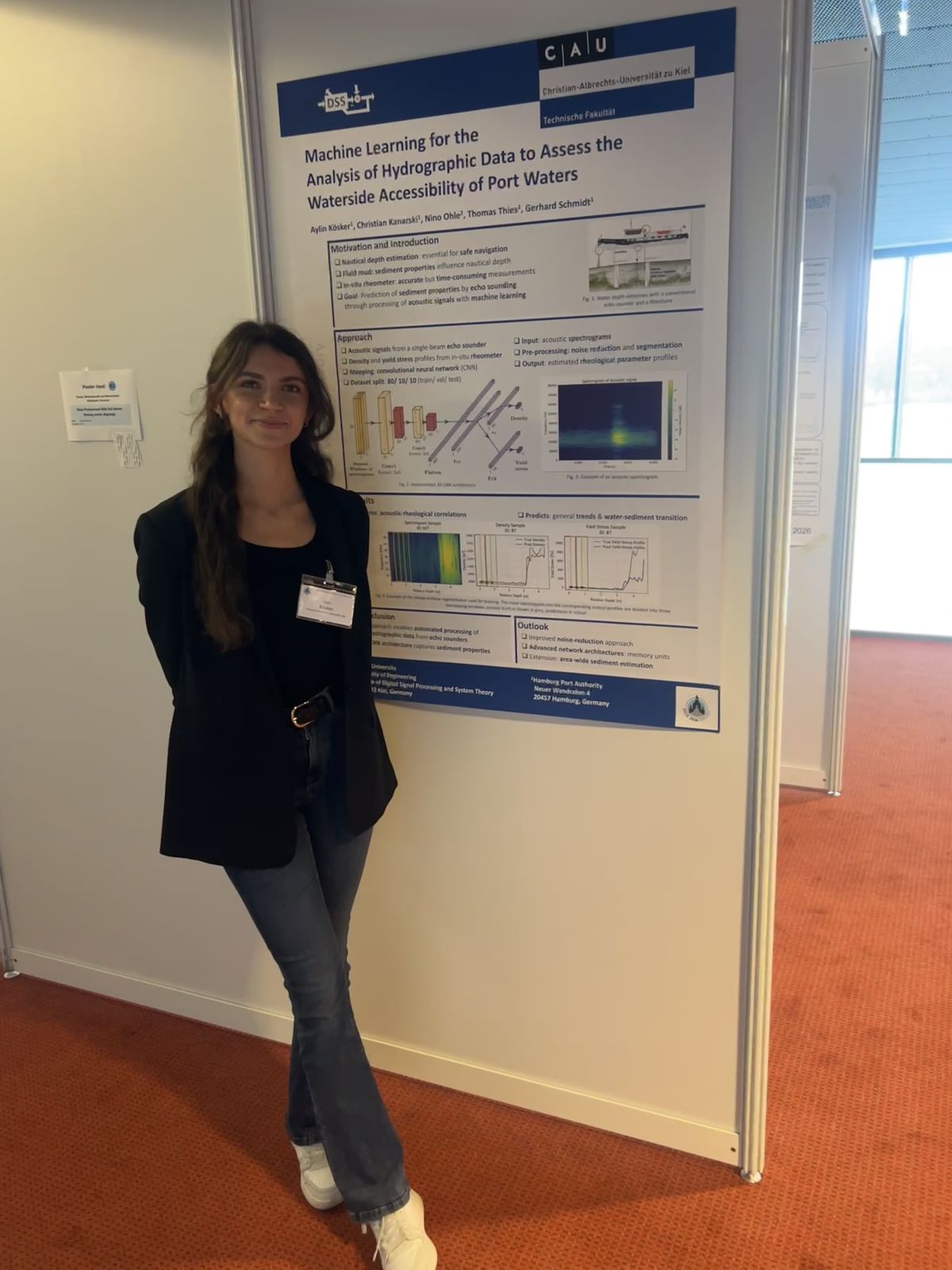
Aylin Kösker Presented her Bachelor Thesis at DAGA 2026

In March 2026, the DSS Chair attended the annual DAGA conference in Dresden. Thanks to the support of the GaS-Club, the student Aylin Kösker was given the opportunity to accompany the chair and participate in the conference from March 23rd to March 26th. As part of the daily poster sessions, she presented the results of her bachelor’s thesis “Machine Learning for the Analysis of Hydrographic Data to Assess the Waterside Accessibility of Port Waters” in the field of Underwater Acoustics. The thesis forms an important basis for an ongoing university research project on the acoustic analysis of sediment properties in harbor areas. The poster session enabled valuable discussions with researchers and conference participants from related research fields.

Further details